
Design Is Revenue: How the Right InteriorsTurn a Good Rental Into a High-PerformingOne
Guests scroll fast.
On any given search — Airbnb, Vrbo, Google — a luxury traveler sees dozens of listings in seconds. Thumbnails blur together. Descriptions blend. And the decision to click, or to keep scrolling, happens before any conscious evaluation takes place.
What stops the scroll isn't square footage. It isn't the number of bedrooms or the size of the pool. It's the feeling the space communicates in a single image — the sense that this place was designed with intention, that someone thought carefully about every choice, and that staying here would feel different from staying somewhere else.
That feeling is design. And for luxury short-term rentals, design is revenue.
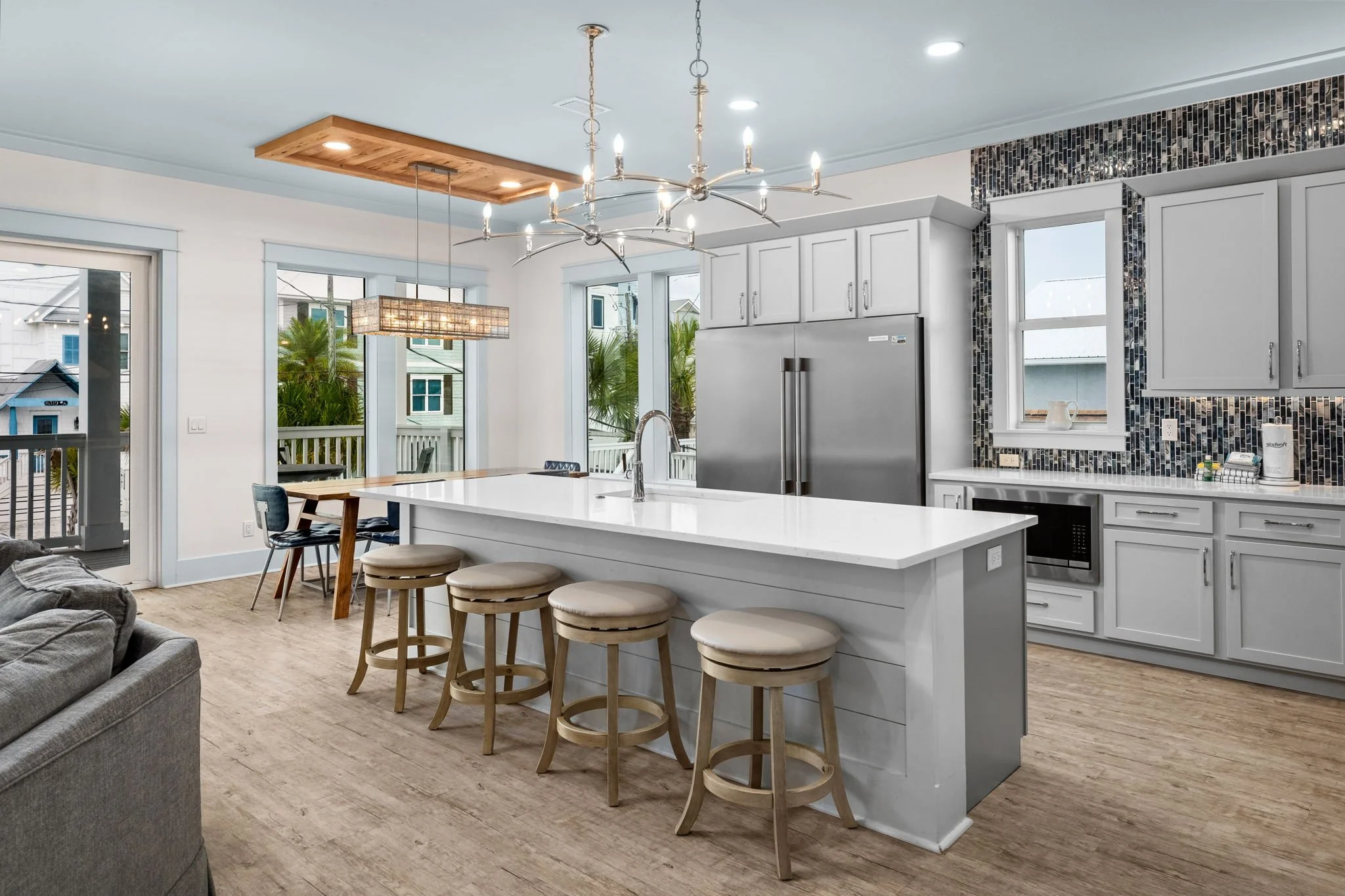
The Gap Between Furnished and Designed
Most luxury vacation rentals are furnished. Very few are designed.
The difference isn't always visible in person — not immediately, at least. A furnished home has nice things in it. A designed home has the right things in the right places, chosen for a cohesive experience that photographs beautifully, functions intuitively, and makes guests feel something specific the moment they walk in.
A furnished home might have a comfortable sofa, quality linens, and a well-equipped kitchen. A designed home has all of those things — but also a palette that tells a story, lighting that creates mood, textures that invite touch, and spatial flow that makes every room feel purposeful.
Guests feel this difference immediately, even if they can't articulate it. And it shows up in every metric that matters: click-through rate, booking conversion, nightly rate, review language, and repeat visits.
What Design Actually Moves in Revenue
The data on design ROI in short-term rentals is increasingly clear, and it's not subtle.
Professionally designed listings command measurably higher nightly rates — not incrementally higher, but meaningfully. Properties that invest in cohesive styling, quality materials, and photography-ready spaces routinely earn 20–40% more per night than comparable properties in the same market that are furnished but not designed.
They also book faster. In a market where the first impression is a thumbnail — one image competing against dozens — a designed space creates an immediate visual hierarchy that pulls the eye and earns the click.
And the guests they attract are different. Travelers who are drawn to intentionally designed spaces tend to be higher-spending, more respectful of the property, and more likely to leave detailed five-star reviews. They're also more likely to return — because the experience felt personal, not transactional.
Design doesn't just increase revenue. It changes the quality of revenue.
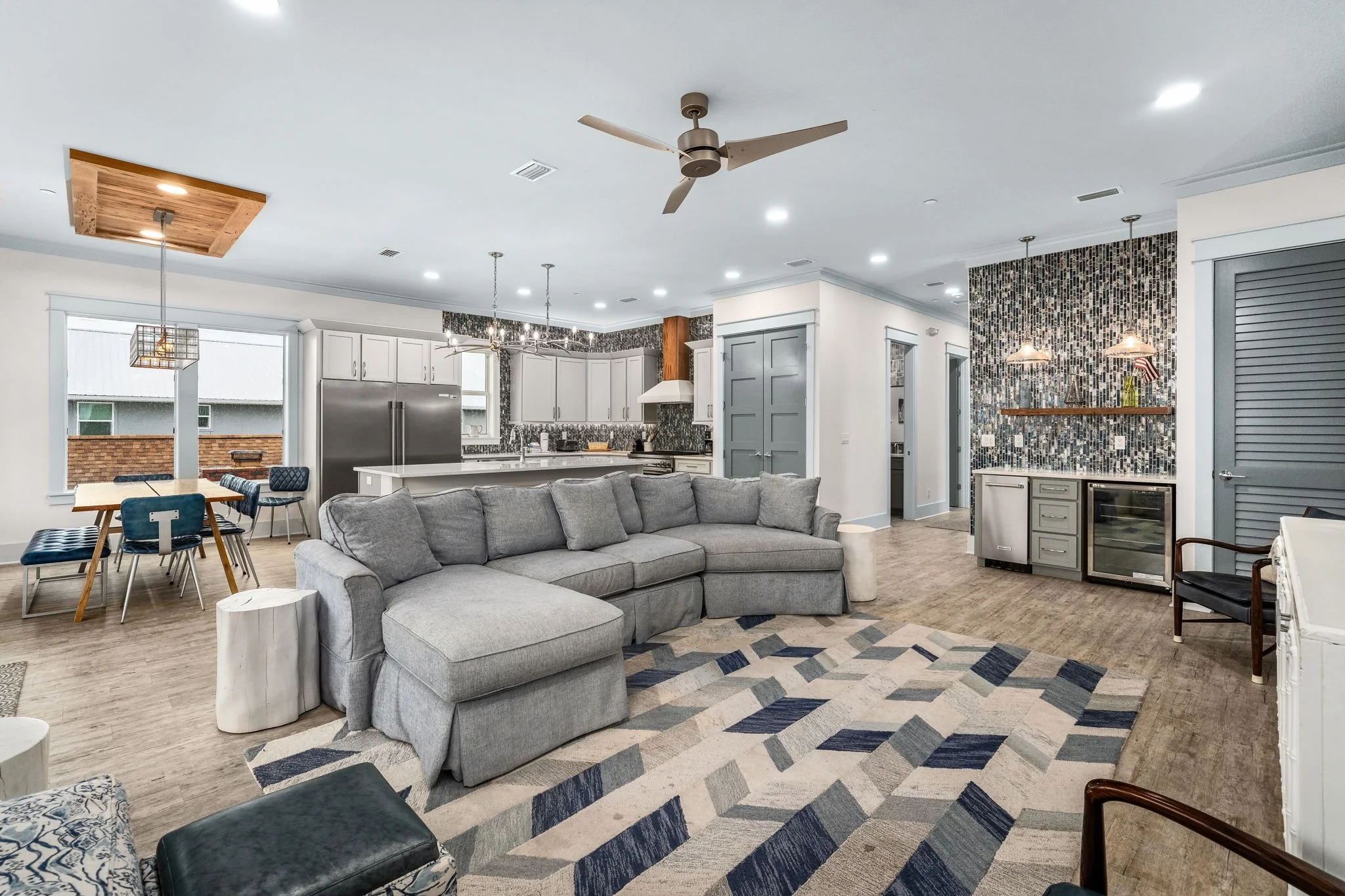
The Details Luxury Guests Actually Notice
When the average rental guest evaluates a space, they look at size, amenities, and price.
When a luxury guest evaluates a space, they look at choices.
Was the palette intentional? Do the materials feel considered — or assembled? Is the lighting warm and layered, or flat and overhead? Do the outdoor spaces feel like an extension of the interior, or an afterthought?
Luxury travelers notice texture: the weight of a throw blanket, the quality of a faucet, the feel of a countertop under their hand. They notice spatial flow: whether rooms connect naturally, whether there's a clear rhythm between communal spaces and private ones, whether the home feels spacious without feeling empty.
They notice what's absent: clutter, mismatched pieces, generic art, furniture that looks like it was chosen for durability rather than experience.
And they notice — more than anything — whether the space feels like someone cared.
Not about impressing them, but about creating something genuine.
That perception of care is what separates a four-star stay from a five-star one. And it lives almost entirely in design.
The Photography Connection
Design and photography are inseparable in the STR revenue equation — and most owners underestimate how directly one drives the other.
A well-designed space earns better photographs. Not because the photographer is more talented, but because the raw material is richer: intentional compositions in every room, natural focal points, clean sight lines, surfaces that catch light beautifully.
Better photographs earn higher click-through rates. Higher click-through rates earn more bookings. More bookings earn more reviews. And a strong review base — built on guests who consistently describe the space as "stunning," "thoughtfully designed," or "even better than the photos" — reinforces the listing's visibility and pricing power on every platform.
This isn't a linear relationship. It's a compounding one. Each element amplifies the next.
And the entire chain starts with a single decision: whether the space was designed for impact, or merely furnished for function.
Why Design Protects Your Asset
There's a secondary benefit to intentional design that most owners don't consider: it attracts guests who treat the space better.
This isn't intuition — it's pattern. Properties that present as carefully curated, thoughtfully maintained spaces tend to experience less damage, fewer complaints, and better post-stay condition. Guests who appreciate design — and who are willing to pay a premium for it — generally treat the space with more respect.
Conversely, properties that present as functional but generic — even expensive ones — tend to attract guests who see the space as a commodity. A place to use, not to appreciate. And that dynamic shows up in wear, in review tone, and in long-term maintenance costs.
Good design doesn't just earn more revenue per stay. It reduces the cost of each stay over time.
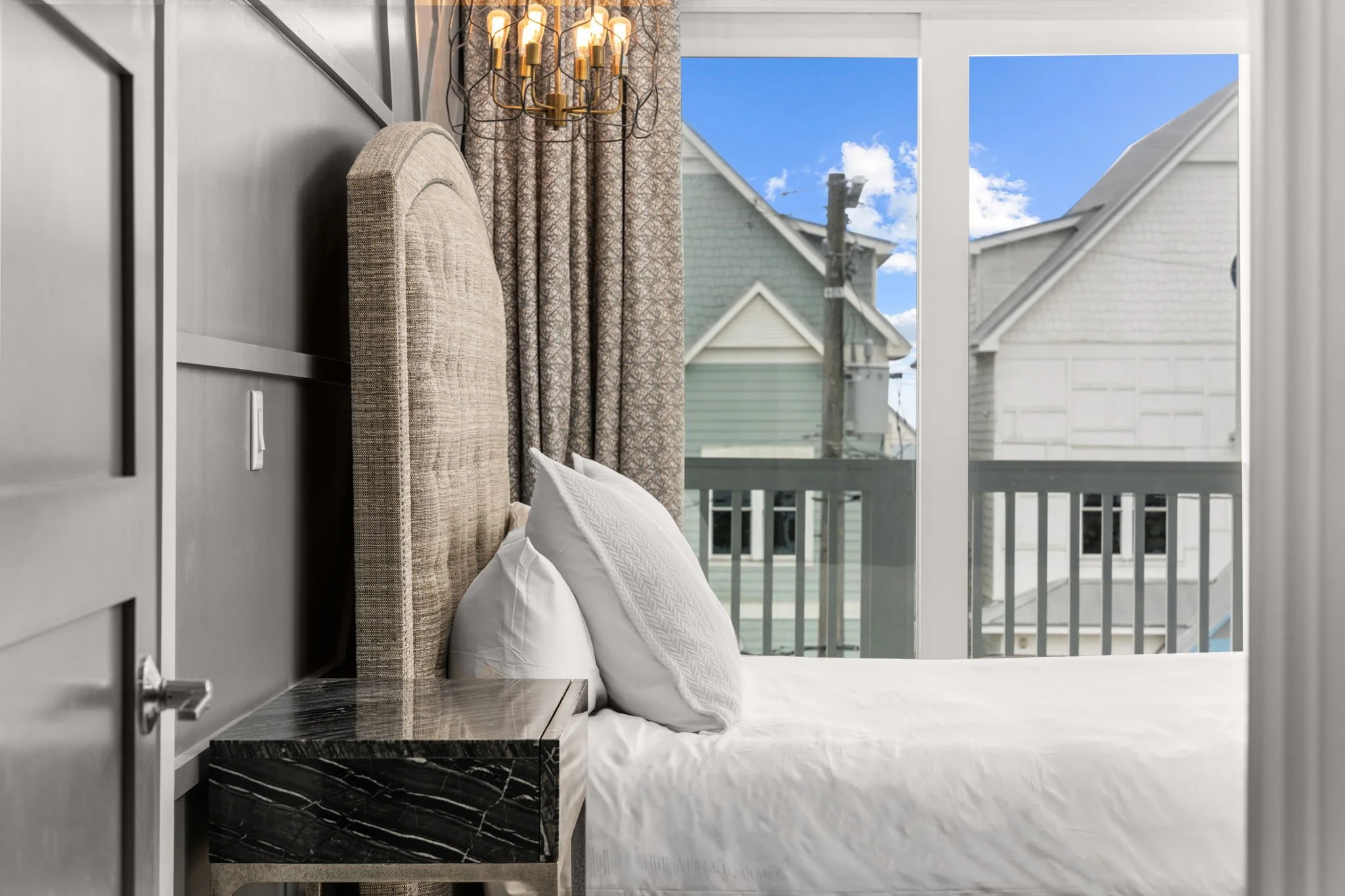
What Intentional Design Actually Requires
The good news: achieving design-driven performance doesn't require a complete renovation.
Often, the highest-impact changes are the most targeted: a unified color palette.
Upgraded linens and textiles. Lighting that creates layers and mood instead of just illumination. Curated art that reflects the location rather than filling wall space. Outdoor furniture that matches the level of the interior. Removal of visual clutter.
What it does require is someone who understands the intersection of design and performance — not interior design for the sake of aesthetics, but design as a strategic investment. Which upgrades will move nightly rate? Which changes improve photography? Which details will guests mention in reviews?
That's not a decorator's question. It's a revenue question.
Design as the Highest-ROI Decision
At Paragon Owners Circle, design is treated as what it is: a performance lever.
Every property in the portfolio benefits from design and experience strategy — not cosmetic recommendations, but data-informed decisions about how the space should look, feel, and photograph to maximize revenue. Styling and furnishing strategy, photography-ready staging, STR-focused design improvements — each one calibrated to the property's market, guest profile, and revenue targets.
Because in luxury short-term rentals, the homes that earn the most aren't always the biggest or the most expensive.
They're the ones where every detail was chosen on purpose.
See how Paragon positions properties for performance. Request a revenue projection at paragonownerscircle.com.